
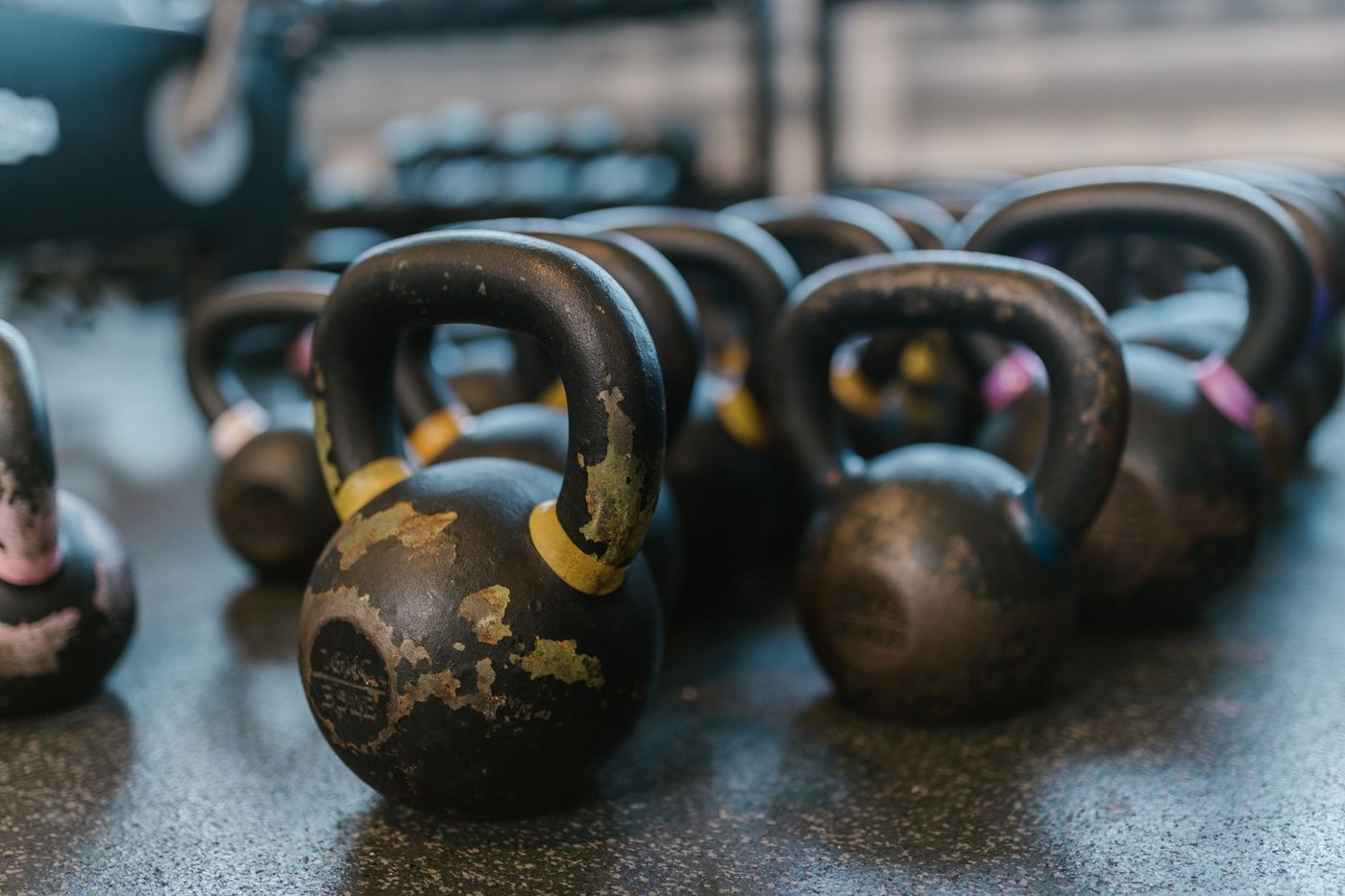
Pressing can be done with a barbell, a pair of dumbbells or a kettlebell. Three small experiments, published in the Journal of Sports Medicine (2013), the International Journal of Exercise Science (2018) and the Journal of Sports Science and Medicine (2020), compared such implements by measuring muscle activity with surface electromyography (EMG), which records the electrical signal from a muscle. Each tested volunteers. None measured muscle growth or strength gains, and the sections read report no comparison of one brand or model against another. This is general information, not training advice.
What EMG can and cannot show
The 2020 authors write that EMG measurements have their limits, so randomized longitudinal studies should be performed to determine the long-term benefits of different exercises. The 2018 authors add that their single-arm load, 25% of the bilateral one-repetition maximum (1RM), may only represent a load appropriate for muscle endurance training. Each study also sampled only some muscles, so a higher reading in one muscle says nothing about the others.
Overhead press: kettlebell against dumbbell, 21 students
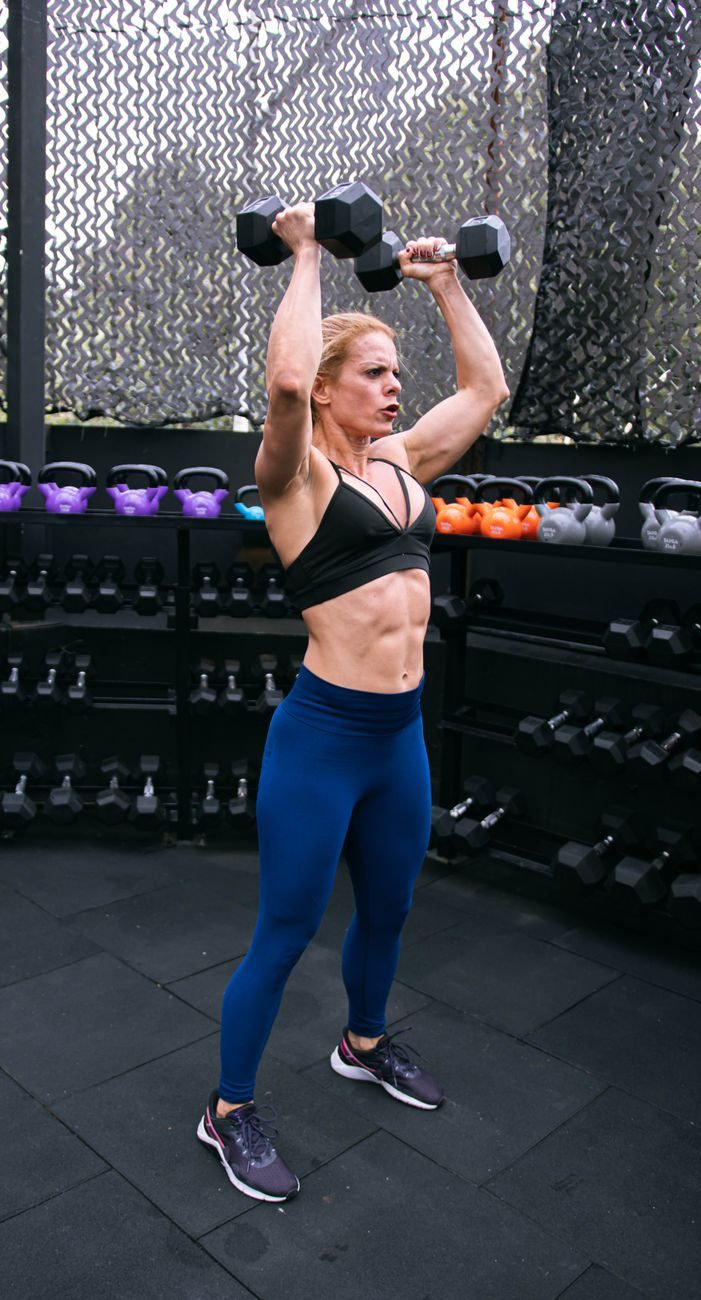
Dicus and colleagues (2018) asked 21 college-aged participants to perform a one-arm overhead press with a kettlebell and with a dumbbell, each loaded to 25% of the participant’s bilateral 1RM. A metronome set the pace at a two-second lift and a two-second lowering. The authors note that a dumbbell’s mass sits in line with the shoulder joint, whereas the kettlebell’s centre of mass is behind it, which may make the kettlebell less stable.
Average peak activity in the anterior deltoid, the front of the shoulder, was 63.3% of maximal voluntary isometric contraction (MVIC) with the dumbbell and 57.9% with the kettlebell, a statistically significant difference. In the pectoralis major (chest), the figures were 31.0% and 29.5%, with no significant difference. The authors list as limitations that only two muscles were analysed and that technique was checked by visual observation.
Bench press against dumbbell flyes: 17 trained men
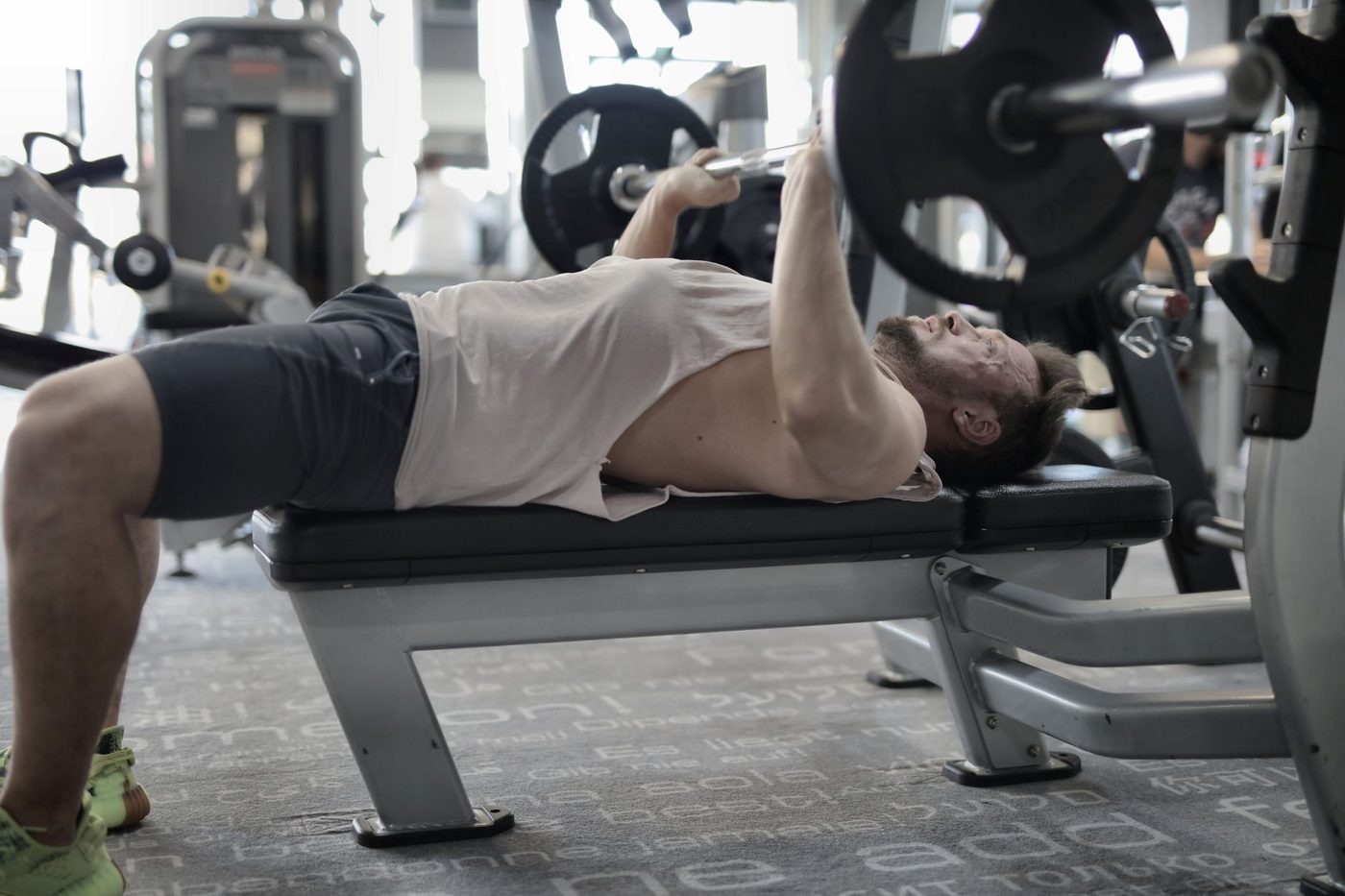
Solstad and colleagues (2020) tested 17 resistance-trained men, with an average of 4.8 years of lifting experience, on the barbell bench press and the dumbbell fly, using six-repetition-maximum (6RM) loads and four muscles. Activity in the pectoralis major, anterior deltoid and triceps brachii was higher in the bench press, by 8 to 81 percent across the whole movement and most phases. Activity in the biceps brachii was higher in the flyes, by 57 to 86 percent.
The loads differed: the total 6RM was 88.5 kg (standard deviation 16.0) for the bench press and 40.5 kg (standard deviation 7.7) for the flyes. The authors concluded that both exercises could be included in training programmes, but that the bench press should be emphasised because of its higher muscle activation overall. They said the flyes might be useful for specific populations and tasks that call for strength and control in a horizontal shoulder flexion position with extended elbows. The sample was only resistance-trained males, so the findings cannot be generalised to other populations.
The paper says only one earlier study had compared the two exercises. That study, by Welsch and colleagues (2005), found similar activity in the pectoralis major and anterior deltoid, but it measured only two muscles and analysed the average peak over three non-fatigue repetitions. The measures differ, so the two studies are not directly comparable.
Three dumbbell presses: 24 women with 4.5 kg dumbbells
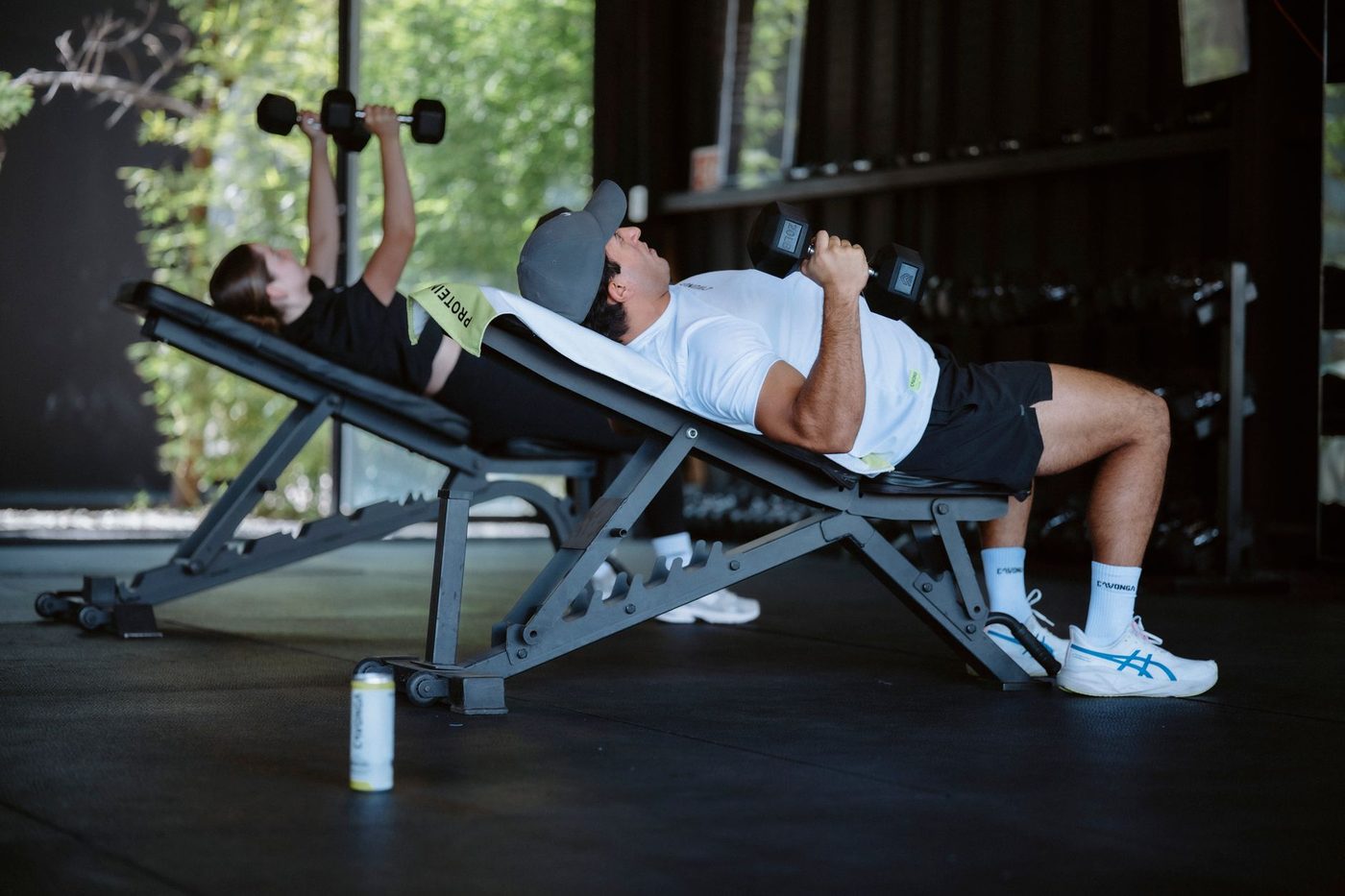
Luczak and colleagues (2013) studied 24 healthy college-aged recreational female athletes, 12 experienced in upper-body weight training and 12 novices. Using 4.5 kg dumbbells in each hand, they performed a flat bench press, a 45-degree incline press and an 85-degree shoulder press while EMG was recorded from the dominant arm. The experienced and novice groups did not differ significantly.
For the upper trapezius and anterior deltoid, activity was greatest in the shoulder press, then the incline press, then the bench press. The bench and incline presses produced more activity than the shoulder press in the sternal part of the pectoralis major. In the clavicular part, the incline press was highest in the lowering phase, while in the lifting phase the order was bench, then incline, then shoulder press. The authors say the results can only be generalised to healthy, college-aged women, and that future research should consider greater exercise intensity.
Reading the three together
The studies compared different things. The 2018 paper matched the absolute load between implements, the 2020 paper used each exercise’s own 6RM, and the 2013 paper used 4.5 kg dumbbells. The participants were college-aged volunteers in 2013 and 2018, and resistance-trained men averaging 22.9 years old in 2020. The papers say nothing about which implement suits a particular home gym, and they cannot show that higher EMG in one muscle produces more strength or size.
The bottom line
In these three small studies, a dumbbell produced higher anterior deltoid activity than a kettlebell in a one-arm overhead press at matched load, a barbell bench press produced higher chest, shoulder and triceps activity than dumbbell flyes while flyes produced higher biceps activity, and the order of muscle activity changed with bench angle in dumbbell presses by women using 4.5 kg dumbbells. The authors of each paper limit their conclusions to the samples tested, and the 2020 authors call for longer randomized studies.
Sources
- Stability of Resistance Training Implement alters EMG Activity during the Overhead Press, Dicus et al., International Journal of Exercise Science, 2018, read 31 October 2026 (pmc.ncbi.nlm.nih.gov)
- A Comparison of Muscle Activation between Barbell Bench Press and Dumbbell Flyes in Resistance-Trained Males, Solstad et al., Journal of Sports Science and Medicine, 2020, read 31 October 2026 (pmc.ncbi.nlm.nih.gov)
- Shoulder Muscle Activation of Novice and Resistance Trained Women during Variations of Dumbbell Press Exercises, Luczak et al., Journal of Sports Medicine, 2013, read 31 October 2026 (pmc.ncbi.nlm.nih.gov)